The decisions that turned a market engine into a daily habit
Kanz Market Radar reads the Arab and US markets for members who want to understand the market, not be told what to buy. These are the design calls that mattered most, and what each one converted into.
across 6 markets
nearly half of members
under analysis
among paying members
An engine with no front door
KANZ Markets teaches Arab professionals how markets behave. RADAR is its analysis engine: the desk reads every listing technically and fundamentally and publishes setups, scores and a daily market read. When I picked it up in March 2026 the methodology existed and the community existed, but no member had a reason to open it on an ordinary day.
The constraints shaped everything. Educational and non-advisory, so nothing on screen could read as “buy”. Arabic first, right to left, with English as a full second language. And sold inside the paid KANZ packages rather than on its own, so it had to earn its place through use, not a paywall. The question was never “how do we show more data”. It was “what makes a member come back tomorrow, and trust what they see when they do”.
Six decisions, and what they converted into
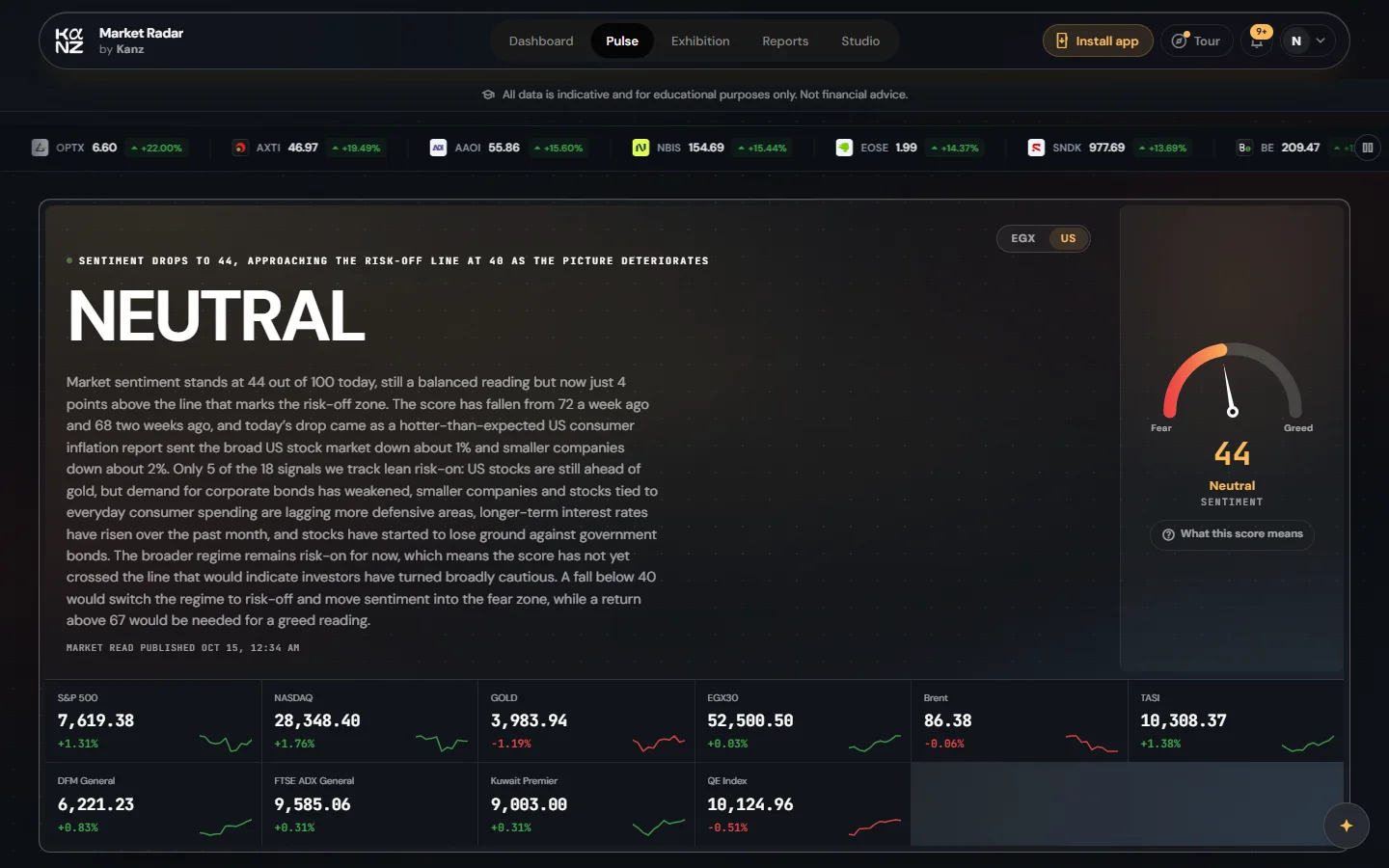
Pulse opens on a single word for the market (Neutral, Risk-on, Risk-off), a 0 to 100 sentiment reading with what each zone means, and a short written read of why it moved and what would change it. Index tiles and the day’s movers sit below. Why: the executive with no time needs the answer in one glance, and the beginner needs the why. One word plus its reasoning serves both, on one screen.
Converted Pulse became the front door of the daily routine. Together with watchlists and portfolio tracking it carries the 81% monthly activity among paying members.
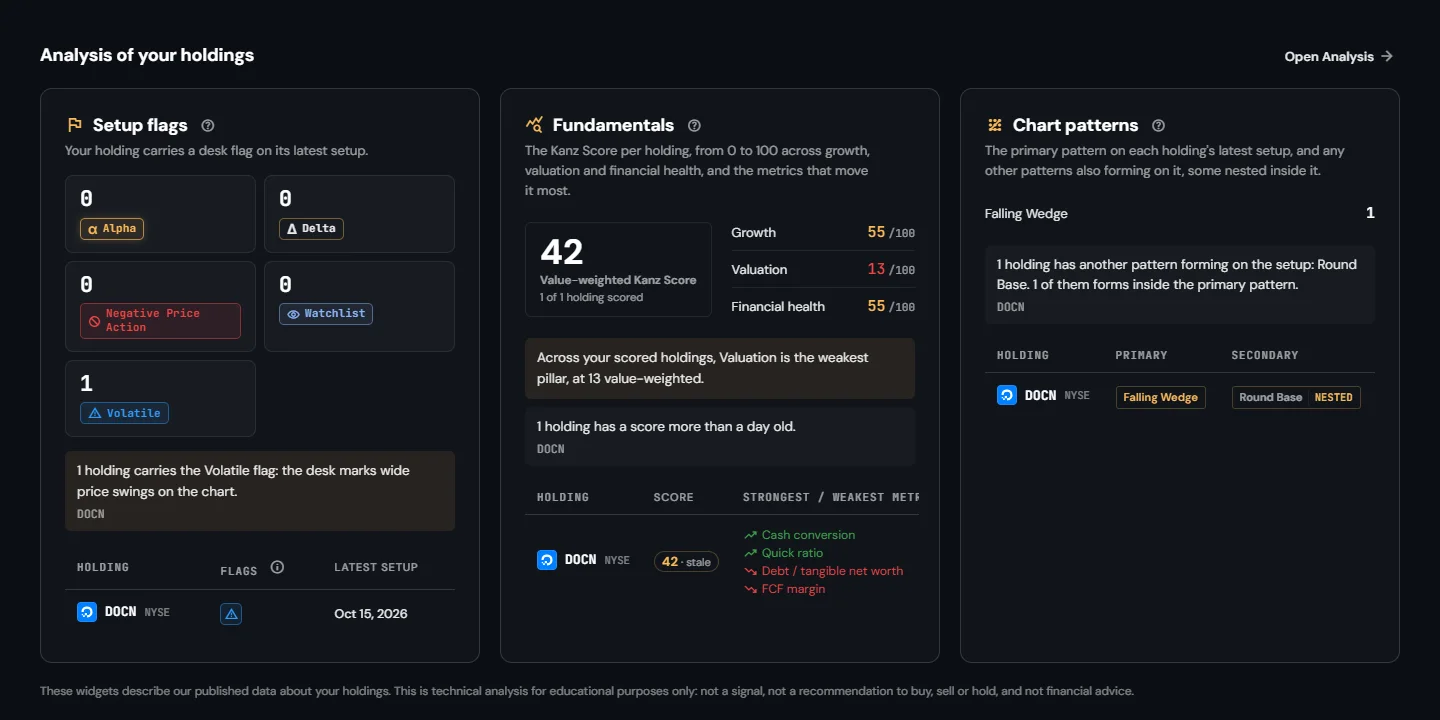
Rather than a market product with a portfolio tab, the Dashboard opens on the member’s own book: value against the market today, what the suggested stops would cost, the next earnings and dividends. Then it applies the desk’s own work to each holding: setup flags, Kanz Scores and the chart patterns forming on it. Why: analysis of the market is interesting, analysis of what you own is useful. It turns every published setup into something personal.
Converted 179 of 400 paying members, nearly half, connected their own portfolios, putting 810 holdings under analysis.
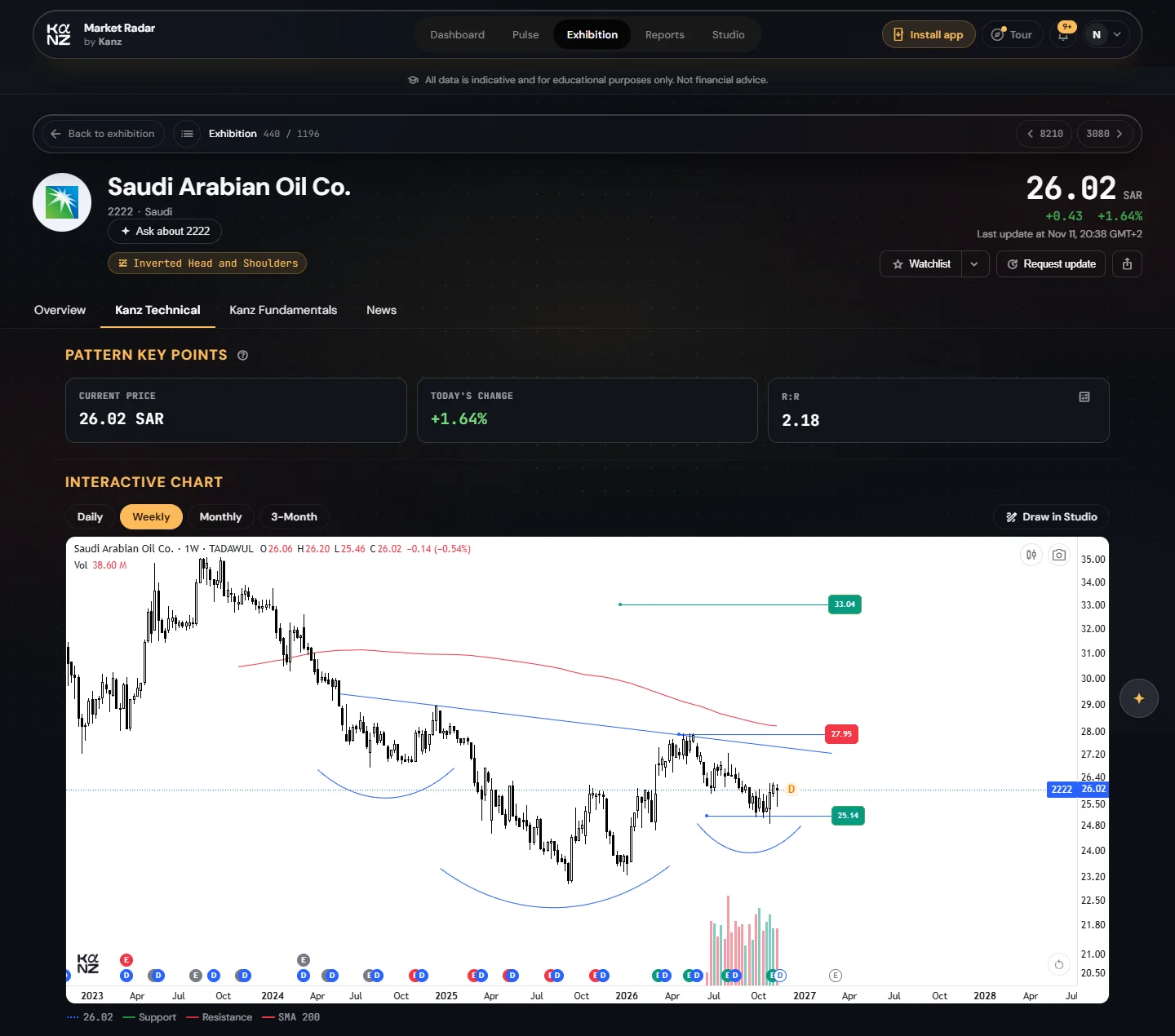
Every figure says what it measures and who produced it. Kanz Technical and Kanz Fundamentals are named as the desk’s own work, and outside consensus is labelled third-party. The R:R badge has one neutral style at every value, because it is a chart measurement, not a call. Green only ever means a positive reading. And no chart offers a short-selling tool, because the audience’s own standard prohibits short selling. Why: the product’s regulatory footing and its credibility with a religiously literate audience both depend on never authoring a claim that belongs to someone else.
Converted That footing is what lets Radar ship as an educational feature inside every paid KANZ package, and that package is how it reached 400 paying members.
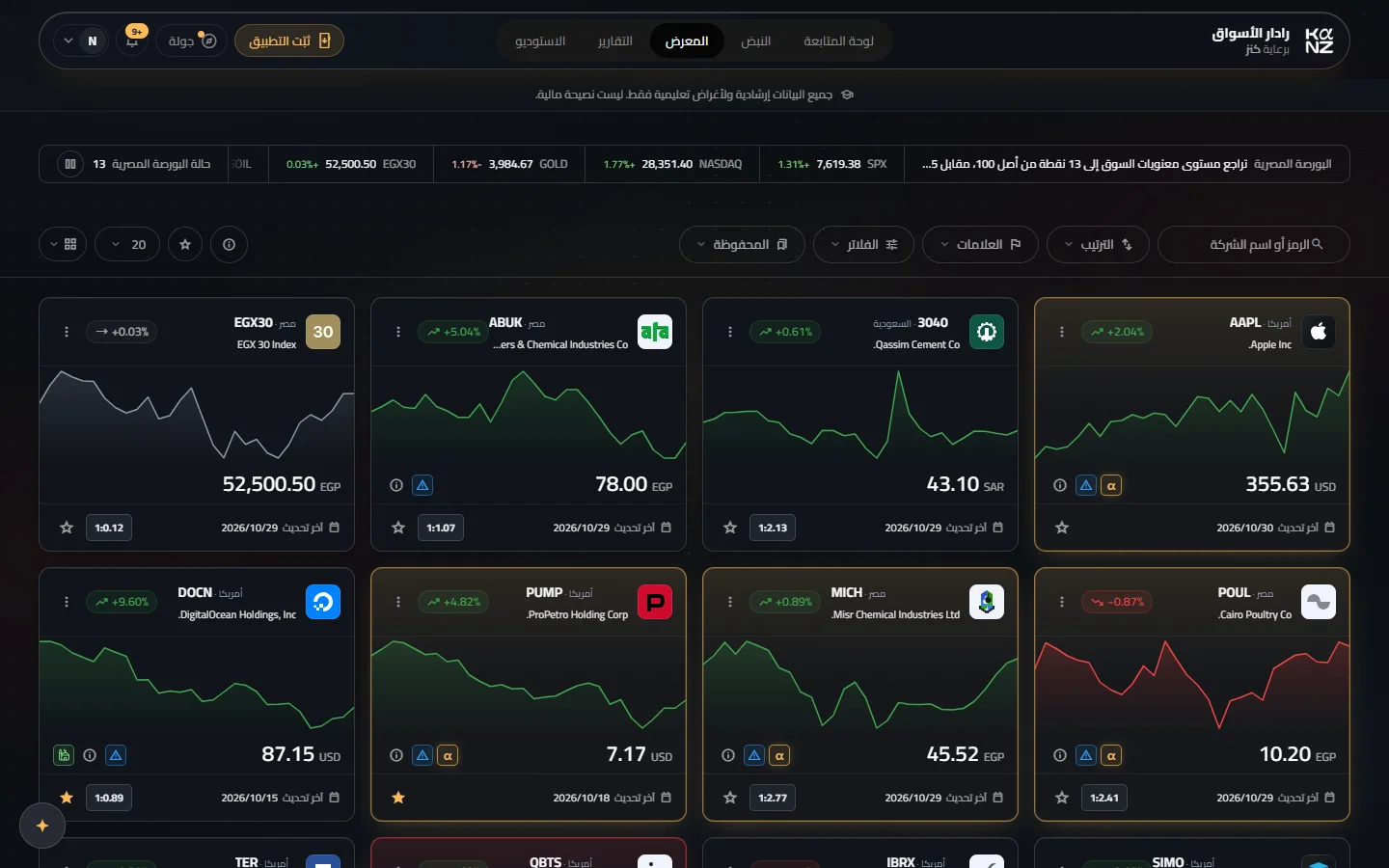
Arabic is the default, laid out right to left from the first sketch rather than mirrored at the end, and English is a full second language, not a translation layer. Saudi Arabia, Egypt, the UAE, Kuwait, Qatar and the US share one structure: Pulse to orient, the Exhibition to browse, the asset page to understand, the portfolio to act. Why: a member following Tadawul and Wall Street should not have to learn two products, and a new market should be new content, not a redesign.
Converted 400 paying members across 6 markets, served by one design system and one set of components in both languages.
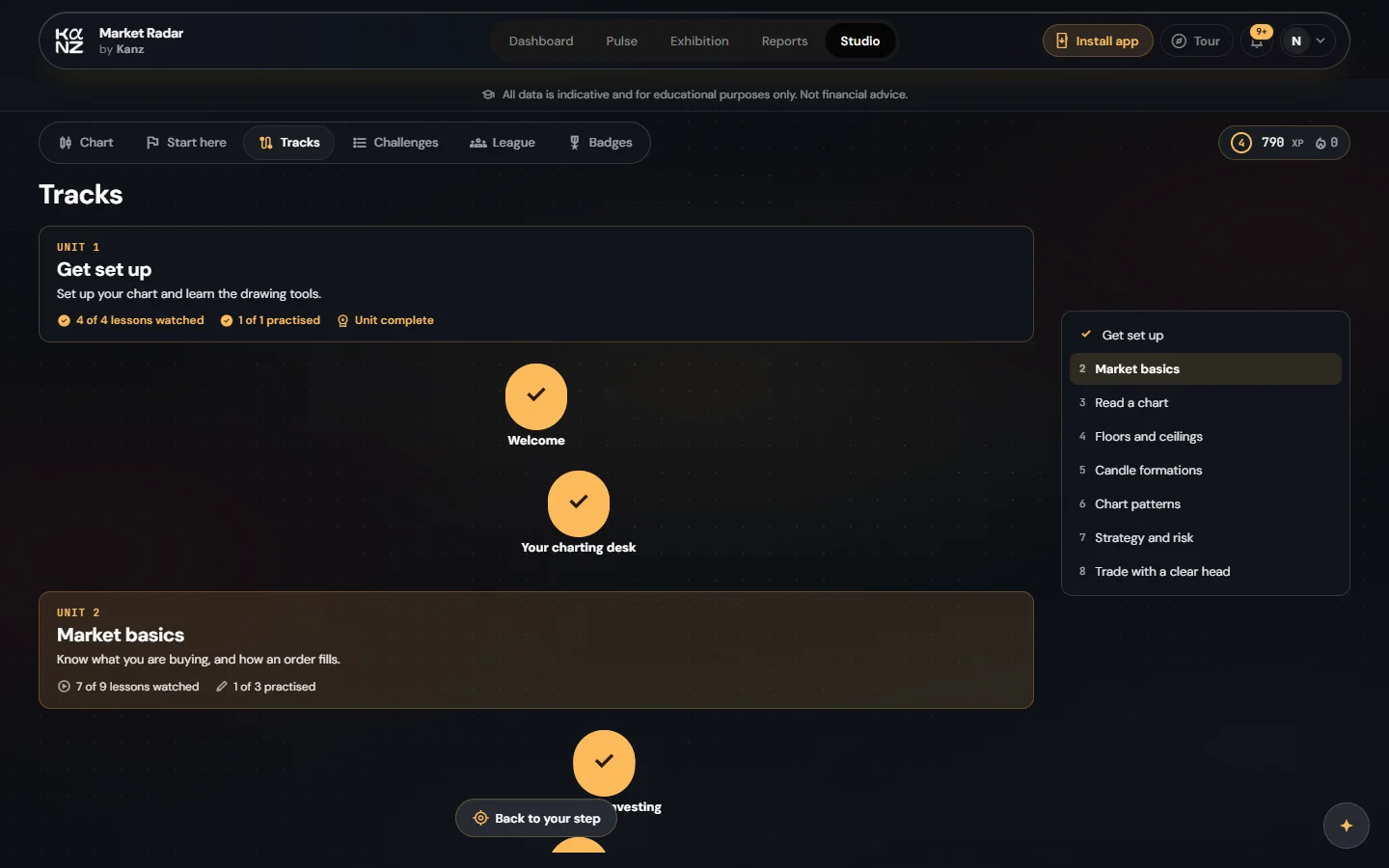
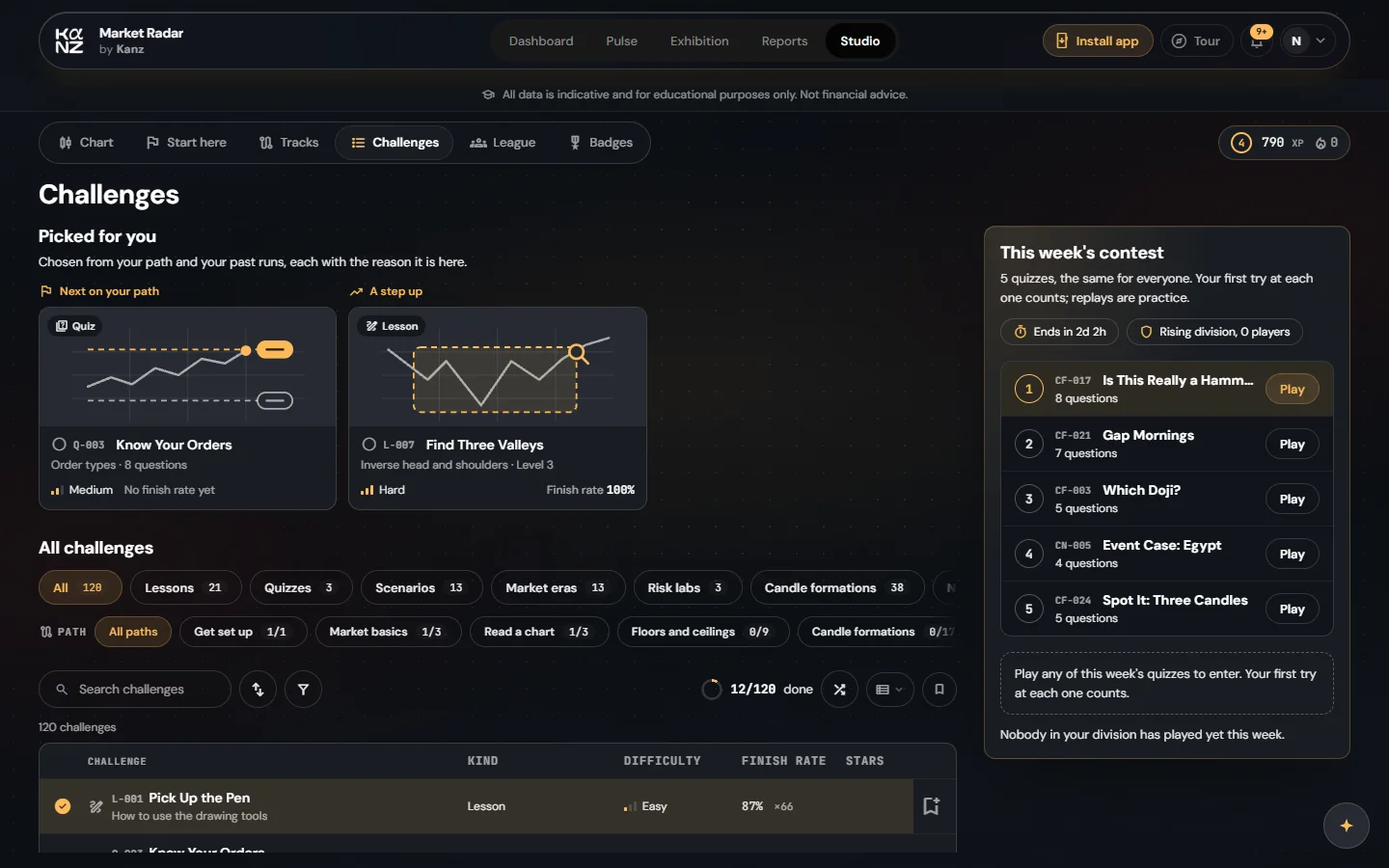
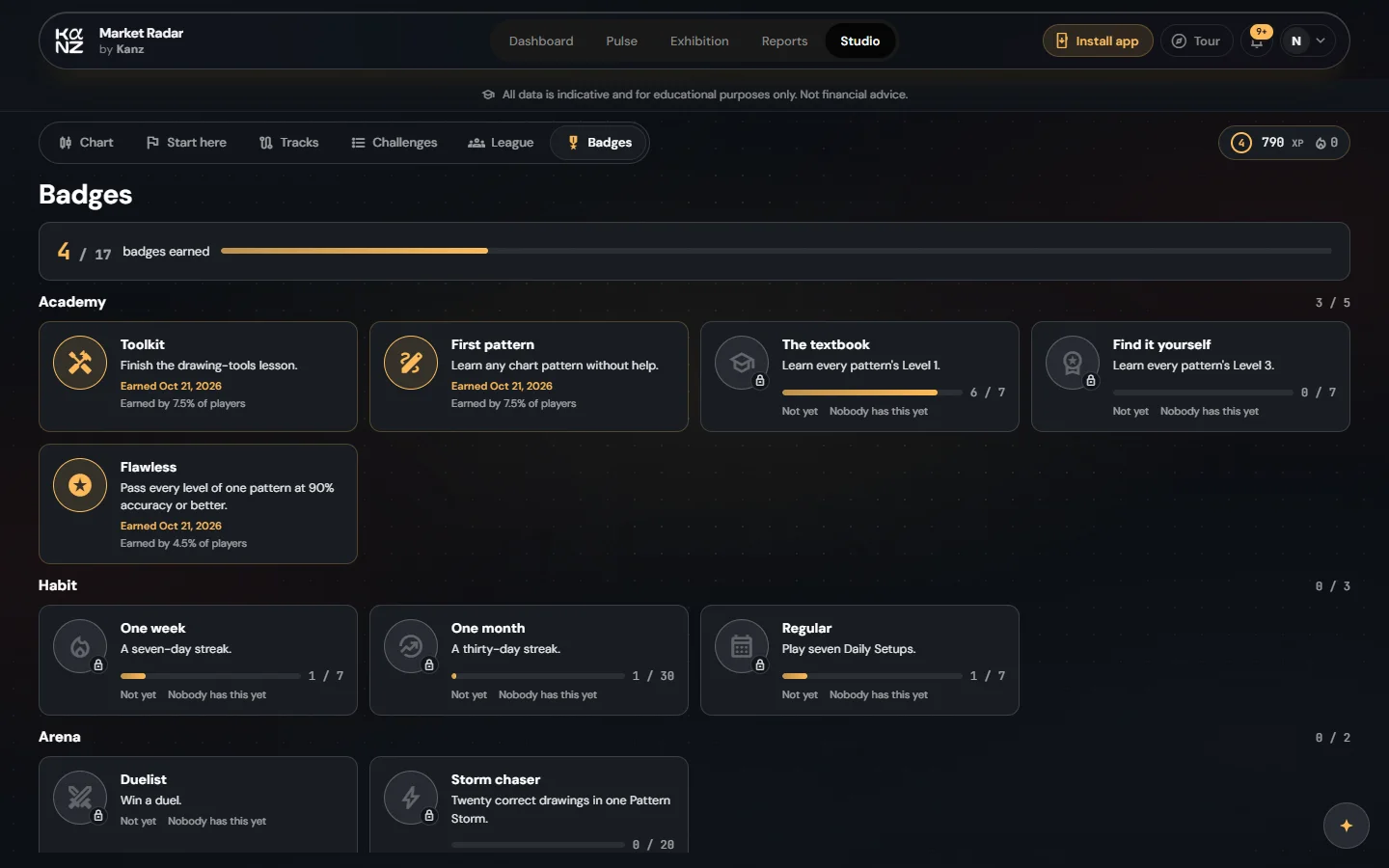
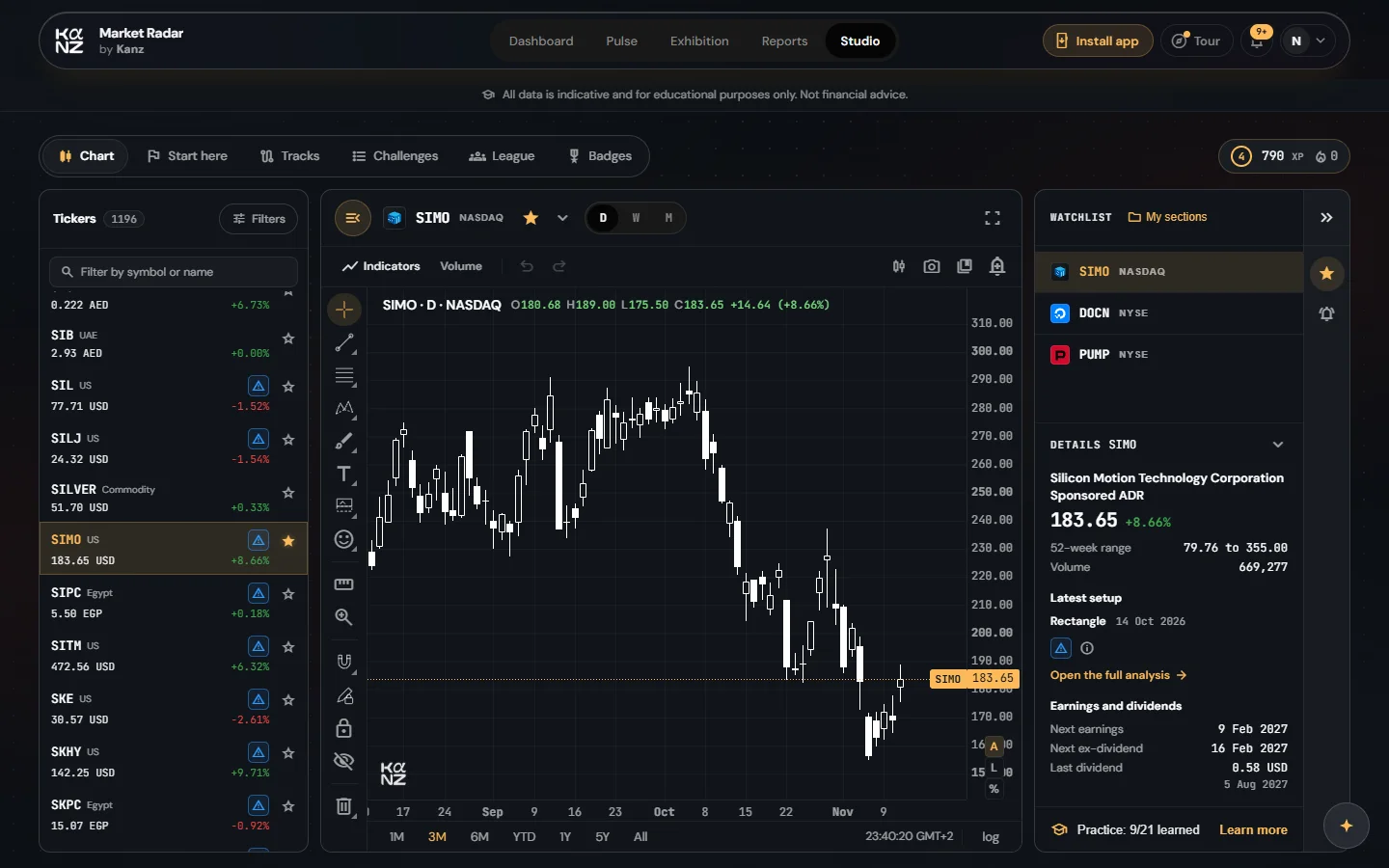
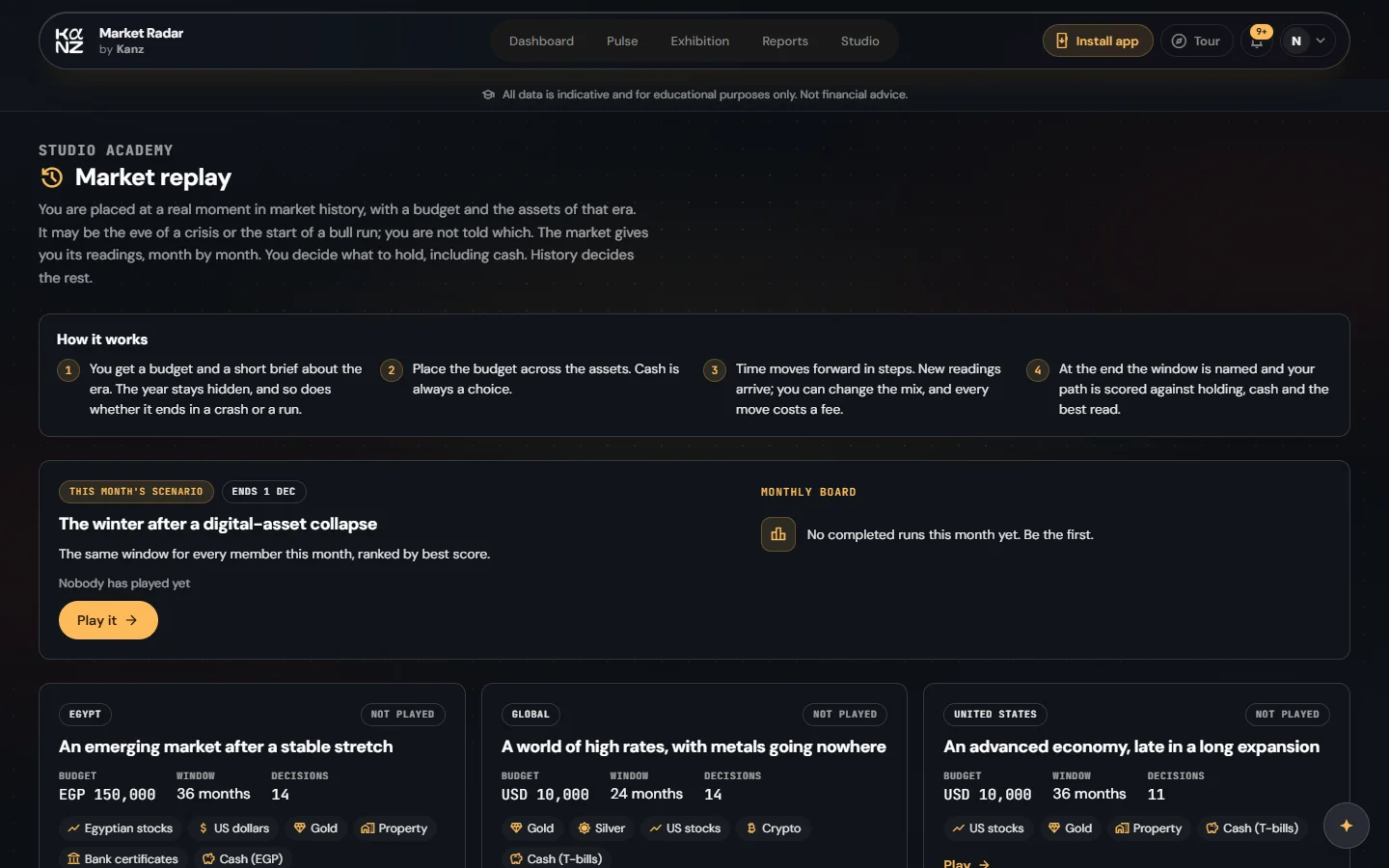
Studio is where members practise on real charts, and it runs on a full game layer. XP says how much you did. A separate pattern rating says how well, and only unassisted drawing and duels move it, never a hint or “solve it for me”. A weekly league climbs from Copper to Kanz in groups of up to 30. Badges are few, and each shows its rarity (“4.5% of players”). Stars on a track only ever go up. A Daily Setup, a weekly contest and Market replay give a reason to come back. Gold marks the member’s own progress and green never appears, because none of it is a market reading, and nothing in it ever follows a real position or a live price. Why: streaks and leagues are powerful, and pointed at trading they would teach exactly the behaviour KANZ exists to prevent.
Converted A reason to open Radar between published analyses, built on the same daily habit that keeps 81% of paying members active each month.
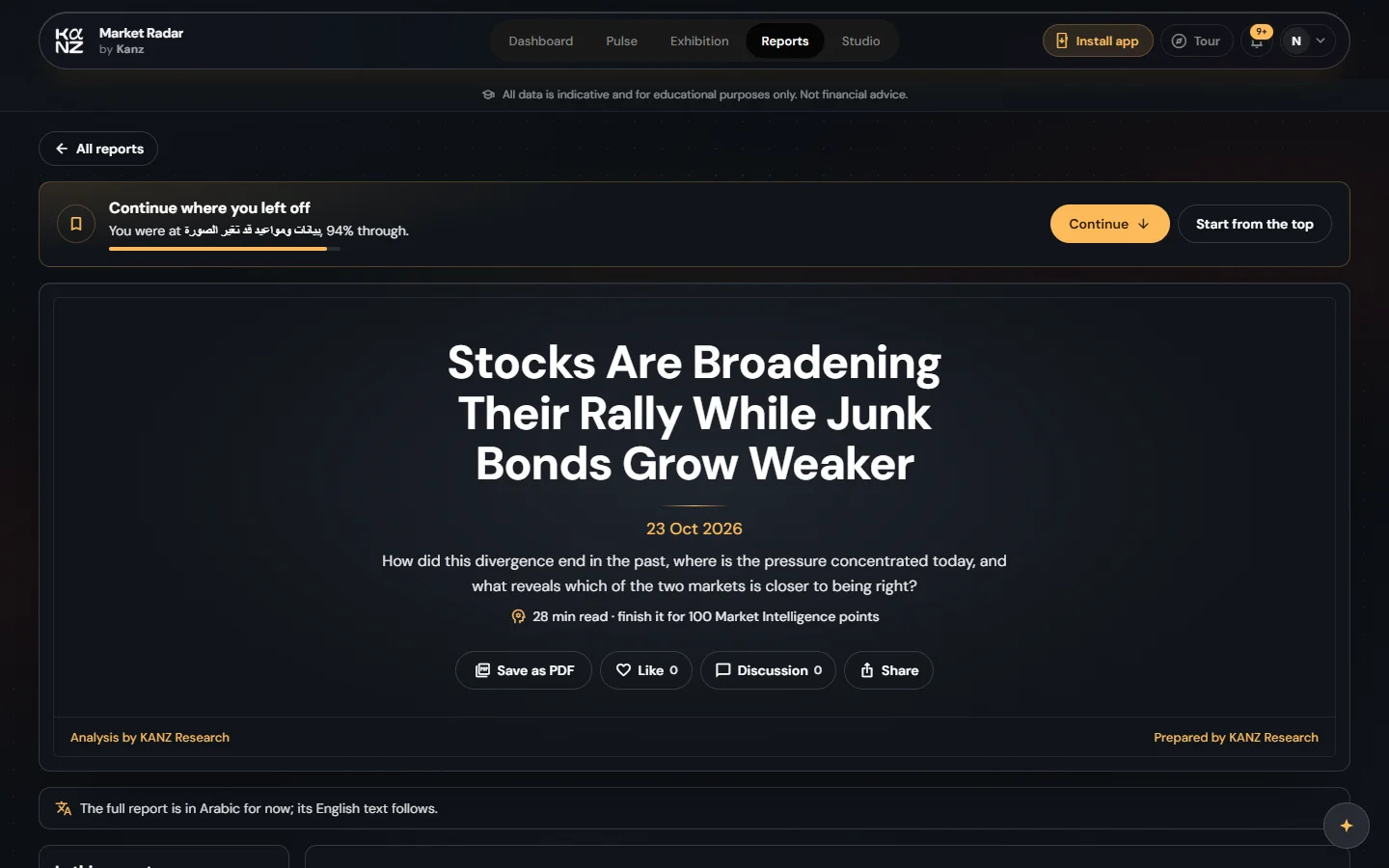
The analysts’ long reports are the deepest teaching in the product, and the easiest thing to abandon. Reading them now earns Market Intelligence points: 10 per minute of reading, up to 100, paid once per report, climbing five levels from Curious through Informed, Sharp and Insider to Strategist. The cover says up front how long it takes and what finishing it earns. The app remembers where the member stopped (“You were 94% through”) and offers Continue or Start from the top. The finish shows what this report earned beside their total, their level and the bar to the next one, and that bar fills from where it was, so the gain is what moves. Why: points for opening would reward skimming. Points for minutes read, paid once, reward exactly what the analysts wrote the report for, and cannot be farmed.
Converted A 28-minute report no longer has to fit one sitting. It has a place to resume and a reason to reach the end, on the same level ladder members already climb.

What each decision converted into
RADAR went from a methodology with no interface to a product that 400 paying members use across 6 markets, and 81% of them every month. The strongest single signal is the portfolio: nearly half of paying members trusted it with their own book.
Radar is live at radar.kanzms.com ↗ (opens in a new tab).
“A verdict without its reasoning is a tip. The whole product is the reasoning.”
The decisions that converted best were the ones that put the member first: their question before our data, their portfolio before our catalogue, their learning before any trade, their reading to the last page. Each one cost something obvious, and each one is now a number.